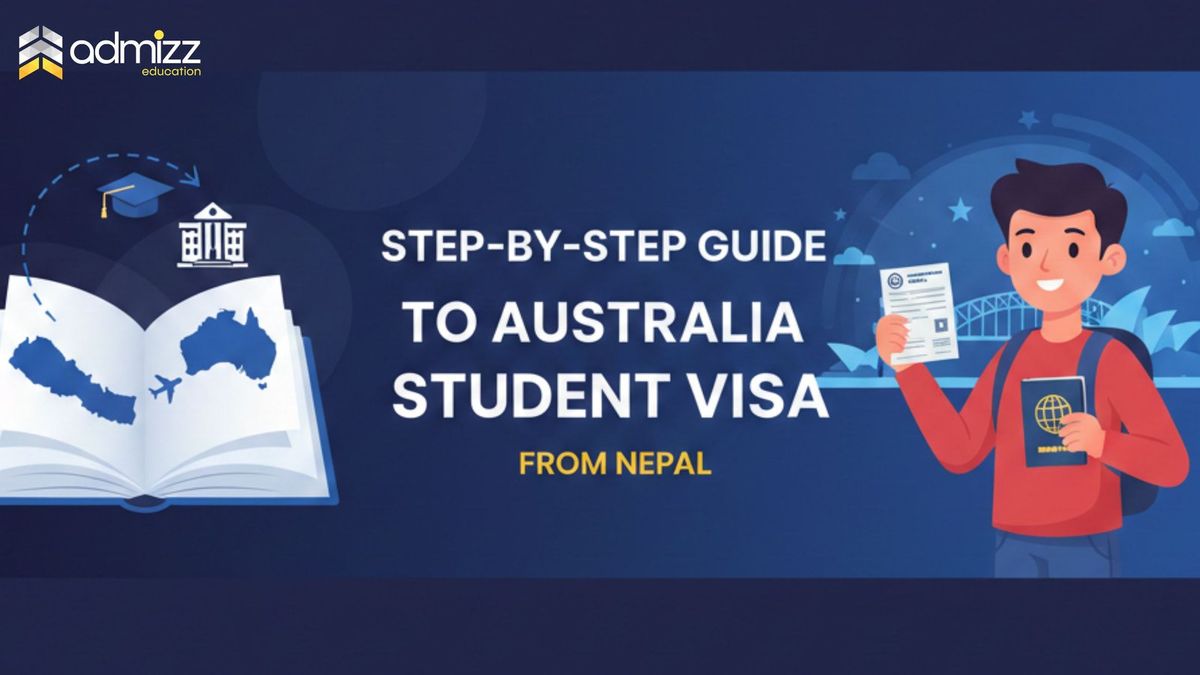
Step-by-Step Guide to Australia Student Visa from Nepal
February 26, 2026
Introduction
Visa Type
Subclass 500
Student Visa — DHA
Nepal Risk Level
Level 3
Highest tier — from Jan 8, 2026
Visa Fee (2026)
AUD 2,000
Up from AUD 1,600 in July 2025
Min. Funds Required
AUD 29,710+
Living costs for Year 1
Processing Time
4–12 weeks
Under Level 3 scrutiny
Work Rights
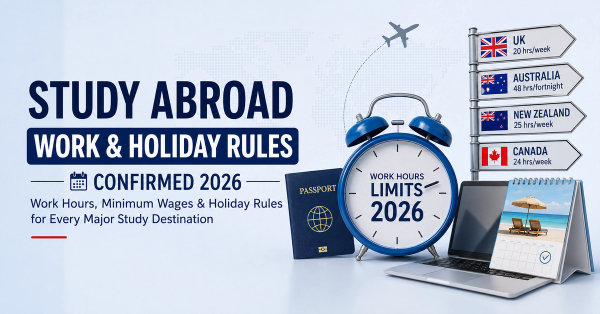
48 hrs/fn
Unlimited during scheduled breaks
🚨
Critical 2026 Change for Nepali Students
Nepal was reclassified to Assessment Level 3 on January 8, 2026. This now means: mandatory English scores for all applicants, 3–6 months of clean financial evidence, a detailed and personalised GS statement, and a possible phone or in-person interview with a case officer. Do not apply without thoroughly understanding these requirements.
Key Takeaways
Nepal moved to Assessment Level 3 (highest risk tier) on January 8, 2026 — triggering maximum document scrutiny for all Nepali applicants.
English proficiency scores (IELTS Academic, PTE, or TOEFL iBT) are now mandatory for all Nepali applicants — no exemptions for English-medium schooling.
You must demonstrate AUD 55,000–70,000 in verifiable funds, evidenced through 3–6 months of consistent bank statements.
The Genuine Student (GS) statement, answered directly in ImmiAccount, is the most critical subjective element of your application in 2026.
Australia has increased its National Planning Level to 295,000 international student places for 2026 — genuine students continue to be approved every day.
Applying to a Level 1 public university meaningfully reduces your overall risk profile under the combined assessment system.
Studying in regional Australia (Adelaide, Hobart, Darwin, Canberra) adds an extra year of post-study work rights under the Subclass 485 visa.
Applying for the Australia Student Visa (Subclass 500) from Nepal in 2026 is still very much achievable — but it now requires a level of preparation that is significantly higher than it was even twelve months ago. Understanding the changes, planning ahead, and preparing every document with honesty and precision is the difference between approval and refusal.
In this complete guide, Admizz Education walks you through every step of the process — from researching your course all the way to receiving your visa and preparing for departure. Read it carefully, follow it honestly, and if you need support at any stage, our team in Kathmandu is here to help.
What Is the Australia Student Visa Subclass 500?
The Student Visa Subclass 500 is the standard visa that allows international students to study full-time at a CRICOS-registered institution in Australia. Issued by the Australian Department of Home Affairs (DHA), it is the only visa category under which Nepali students can enrol in an Australian degree, diploma, certificate, or English language course.
Once granted, the Subclass 500 allows you to stay in Australia for the full duration of your enrolled course — and it comes with significant practical benefits, particularly when it comes to work rights and post-study pathways.
Study Mode
Full-Time Only
CRICOS-registered institutions
Work Rights
48 hrs/fortnight
Unlimited during scheduled breaks
Post-Study Visa
Subclass 485
2–4 years depending on study location
Visa Duration
Course + 2 months
Up to 5 years for some courses
Application Fee
AUD 2,000
Increased from AUD 1,600 in July 2025
Min. Living Funds
AUD 29,710
Plus tuition and travel costs
💡
Smart Strategy for Level 3 Applicants
Nepal sits at Assessment Level 3 (high risk). However, combined application risk is calculated by cross-referencing both your country level and your institution's compliance level. If you apply to a Level 1 public university, your overall risk profile is meaningfully reduced compared to applying to a Level 2 or 3 private college. Choosing a reputable public university — even if it costs more in tuition — is therefore a strategic decision, not just an academic one.
How to Apply for Australia Student Visa from Nepal — 10 Steps
The application process for the Australia Student Visa has ten clearly defined stages. Each step builds on the previous one, and skipping or rushing any stage is one of the most common causes of delays and refusals. Work through each step carefully and in order.
01
Research Your Course and Choose a CRICOS-Registered Institution
Start here — 18+ months before intake
Every institution and course that accepts international students in Australia must be listed on the CRICOS register, searchable at cricos.education.gov.au. Only CRICOS-registered courses are eligible for the Subclass 500 visa — there are no exceptions. Consider course relevance to your career goals in Nepal, location (regional study adds post-study work rights), the institution's compliance level, and realistic cost of living in that city.
🎯 Level 3 Strategy: Apply to a Level 1 public university to reduce your overall risk profile. Private colleges at Level 2 or 3 face maximum document scrutiny when combined with Nepal's Level 3 country status.
02
Appear for Your English Proficiency Test
Book 8–12 weeks before applying
Under Assessment Level 3, English proficiency scores are now mandatory for all Nepali student visa applicants — regardless of previous English-medium schooling. There are no exemptions. Accepted tests include IELTS Academic, PTE Academic, and TOEFL iBT. Standard minimums are IELTS 6.0 overall (bachelor's) and IELTS 6.5 (most master's programs), with no band below 5.5 or 6.0 respectively.
⚠️ Important: IELTS General Training is NOT accepted for university courses. You must sit IELTS Academic specifically. Book your test first — it has the longest lead time of any document.
03
Build and Document Your Financial Evidence
Start 3–6 months before applying
Financial documentation is, without question, the single most scrutinised element of a Nepali student's visa application under Level 3. You must demonstrate genuine, verifiable access to funds covering: first-year living expenses (minimum AUD 29,710), full first-year tuition fees, OSHC health insurance, and return travel costs. Combined, this typically totals AUD 55,000–70,000 (approximately NPR 55–70 lakhs). Funds must have been maintained for at least 3–6 months before applying.
🚫 Common Refusal Trigger: Never submit fabricated, altered, or inflated bank statements. Under Level 3, the DHA cross-checks financial documents with far greater precision. Fraudulent documents result in immediate refusal, a three-year ban, and possible criminal consequences.
04
Apply to Your Chosen University and Receive Your Letter of Offer
2–8 weeks processing time
Submit a complete application with your academic transcripts, certificates, English test scores, and any additional documents required by the specific course. Once assessed, the institution will send you a Letter of Offer. Review this carefully — ensure your name is spelled exactly as it appears in your passport, and that the course name, start date, and duration are all correct.
05
Accept Your Offer and Receive Your Confirmation of Enrolment (CoE)
Most critical single document
After accepting the Letter of Offer and paying the tuition deposit (typically the first semester's fees), your institution will issue an electronic Confirmation of Enrolment (CoE). The CoE is arguably the most critical single document in your application — you literally cannot submit a Subclass 500 application without it. Double-check every field — your full legal name, CRICOS provider code, course code, and start/end dates — against your passport before proceeding.
06
Purchase Overseas Student Health Cover (OSHC)
Mandatory visa condition
Every student on a Subclass 500 visa is required to maintain OSHC for the entire duration of their stay in Australia. OSHC is not optional — it is a visa condition. Purchase from one of the DHA-approved Australian providers: Medibank, Bupa, NIB, CBHS, or AHM. Coverage typically costs AUD 500–700 per year for a single student. Coverage must start from your arrival date and end on or after your CoE end date.
💡 Family Coverage: If your spouse or children will accompany you, they must also be covered by OSHC. Adding a spouse requires an additional AUD 10,394 and each child requires an additional AUD 4,449 in financial evidence.
07
Write Your Genuine Student (GS) Statement
Most important element under Level 3
The Genuine Student (GS) statement replaced the previous Genuine Temporary Entrant (GTE) test. It is answered directly within the ImmiAccount visa application form — not as a separate uploaded document. Under Assessment Level 3, case officers read GS statements with considerably more scrutiny than before January 2026. A generic, vague, or clearly copied statement is now one of the leading causes of visa refusal — even when finances and academic records are strong.
🚫 Do Not: Copy-paste a template from the internet, use AI-generated content verbatim, or write vague statements like "I want to gain international experience." Case officers in 2026 are specifically trained to identify all of these.
GS Writing Framework
Q1
Why this course?
Link the course to your specific academic and professional history. Reference your SLC/SEE grades, +2 subjects, or bachelor's degree and how they connect to your chosen field.
Q2
Why Australia and this institution specifically?
Explain what makes this specific university the right fit — course structure, faculty, industry connections, or research facilities unavailable in Nepal.
Q3
What are your career plans after study?
Describe a specific career path in Nepal. What sector? What role? What gap does this qualification fill that no Nepali institution can currently provide?
Q4
What are your ties to Nepal?
Mention family, property, employment history, or business commitments that create genuine, convincing reasons to return to Nepal after graduation.
08
Create Your ImmiAccount and Lodge the Application Online
immi.homeaffairs.gov.au
All Australian visa applications are lodged through the DHA's online portal, ImmiAccount. Create an account using your personal email — not your institution's email, as you will need access for years after your application. Upload all supporting documents, pay the visa fee of AUD 2,000 by credit or debit card, and save your Transaction Reference Number (TRN) as proof of lodgement.
⚡ Before You Submit: All documents are clear and readable · Documents in Nepali include certified English translations · Your name is spelled consistently across every document · No document has expired · Your OSHC start date aligns with your planned arrival date.
09
Complete Your Medical Examination and Provide Biometrics
1–2 weeks after lodgement
After lodging, you will receive a HAP ID (Health Assessment Portal ID) from the DHA. Use this to book your medical examination at a DHA-approved panel doctor in Kathmandu — approved clinics include International SOS Nepal. The examination typically includes a general health check, chest X-ray, and blood tests. Results are sent directly to the DHA by the panel doctor. You may also be required to provide biometrics (fingerprints and photograph) at VFS Global Nepal in Kathmandu.
10
Await the Decision and Prepare for Departure
4–12 weeks processing under Level 3
Monitor your application status through ImmiAccount. The DHA may contact you requesting additional documents (a Section 56 request) — respond promptly and completely. Once your visa is granted, read every condition carefully — your visa will specify the earliest and latest entry dates, work rights, and any other conditions. Then book your flights, arrange accommodation, and attend a pre-departure briefing.
🛫 Pre-Departure Checklist: Review all visa conditions · Book flights within the allowed entry window · Arrange accommodation (homestay, student housing, or rental) · Carry OSHC membership card · Carry CoE and visa grant notice both digitally and in print · Inform your institution of your arrival date.
Complete Document Checklist — Australia Student Visa from Nepal (2026)
Every item marked as Mandatory must be included in your application. Missing even one document can cause significant processing delays or an outright refusal. Prepare this checklist in advance and verify each item before lodgement.
✓
Valid Passport
Must be valid for at least 6 months beyond your intended stay in Australia. Name must match all other documents exactly. Renew before applying if nearing expiry.
Mandatory
✓
Confirmation of Enrolment (CoE)
Issued electronically by your CRICOS-registered institution after you accept your offer and pay the tuition deposit. You cannot lodge a Subclass 500 application without this.
Mandatory
✓
English Proficiency Test Results (IELTS Academic / PTE / TOEFL iBT)
Under Level 3, English scores are now mandatory for all Nepali applicants — no exemptions for previous English-medium schooling. Results must be valid (within 2–3 years).
Now Mandatory — Level 3
✓
Bank Statements (3–6 Months)
Class A bank statements from a recognised Nepali commercial bank. Must show consistent balance covering AUD 29,710 living costs + full first-year tuition + travel. Sudden large deposits are a refusal trigger.
Stricter Under Level 3
✓
Income Source Documents
Salary slips and employment letter (if employed), business audit reports or trade licence (if self-employed), tax clearance certificate, property ownership documents if assets are cited as proof of funds.
Stricter Under Level 3
✓
Education Loan Sanction Letter
From a recognised Nepali commercial bank. Must clearly state the loan is for education and living costs, specifying the amount and the student's full name. Apply at least 6–8 weeks before your visa application.
If Using Loan
✓
OSHC Policy Document
From an approved Australian provider (Medibank, Bupa, NIB, CBHS, or AHM). Coverage must start from your arrival date and end on or after your CoE end date.
Mandatory
✓
Academic Transcripts and Certificates
All qualifications — SLC/SEE, +2 (Grade 11 and 12), bachelor's degree if applying for a master's. Original or certified copies. Documents in Nepali must include certified English translations.
Mandatory
✓
Genuine Student (GS) Statement
Answered directly within ImmiAccount. Must be personalised, specific, and genuinely written — not copied from templates or generated by AI. The most critical subjective element of your application in 2026.
Critical Under Level 3
✓
Police Clearance Certificate (PCC)
From Nepal Police for all time spent in Nepal. Also required from any country where you have lived for more than 12 months in the last 10 years. Must be recent — typically within 12 months of application.
Mandatory
✓
Passport-Sized Photographs
35–40mm wide, white background, no glasses, taken within the last 6 months. Digital upload required in ImmiAccount.
Mandatory
✓
Sponsor's Financial Documents
If a parent, relative, or sponsor is funding your studies — include their bank statements, relationship certificate, employment verification letter, and signed affidavit of financial support.
If Applicable
✓
CV or Résumé
Required if you have gaps in your education history or if relevant professional work experience strengthens the coherence and logic of your study plan.
If Applicable
✓
NOC from MoEST Nepal
Required if you are currently enrolled in a Nepali institution and seeking to transfer to Australia for study. Apply at noc.moest.gov.np before your visa application.
If Applicable
Translations Required: Any document that is not in English must be accompanied by a certified English translation — including bank statements, academic certificates, birth certificates, relationship certificates, and police clearance certificates issued in Nepali. Use only certified translators — uncertified translations are not accepted by the DHA.
Financial Requirements — How Much Do You Need?
One of the most common points of confusion for Nepali students — and one of the most common causes of visa refusal — is misunderstanding the financial requirements. The DHA requires you to demonstrate access to funds covering three distinct categories, and all three must be evidenced together.
Expense Category
Details
Amount (AUD)
Living Expenses (Student)
DHA-set minimum per year
AUD 29,710
Add: Spouse (if accompanying)
Additional living funds required
+ AUD 10,394
Add: Each Child
Per child, per year
+ AUD 4,449
First-Year Tuition Fees
Varies by course and institution
AUD 20,000–50,000
Return Travel
Nepal–Australia return airfare estimate
~AUD 2,500–4,000
Typical Total (Single Student)
Approx. NPR 55–70 lakhs at current rates
AUD 55,000–70,000
🏦
Best Practice for Nepali Applicants
Start building your financial evidence at least 6 months before you plan to apply. Maintain a consistent, growing balance. Avoid large unexplained cash deposits. If using an education loan, apply for it well in advance — loan processing in Nepal typically takes 4–8 weeks. If a parent or relative is sponsoring you, document their income and their relationship to you clearly and consistently.
Top Reasons Nepali Students Get Their Visa Refused — and How to Avoid Them
Understanding why visas are refused is just as important as understanding the application process itself. Under Assessment Level 3, the threshold for refusal is lower than it has ever been for Nepali applicants. The following are the most frequently cited reasons for refusal in 2026 — and precisely what you can do about each one.
📄
Weak or Generic GS Statement
Vague, copied, or AI-generated statements are among the leading causes of refusal under Level 3. Your GS must be specific, personal, and logically connected to your academic history and career goals in Nepal.
🏦
Suspicious or Inconsistent Financial Documents
Sudden large deposits, inconsistent balances, unverifiable income sources, or documents that don't reconcile with each other are immediate red flags under Level 3 scrutiny.
🚫
Fraudulent or Altered Documents
Any document that is fabricated, altered, or misrepresents the truth results in immediate refusal, a three-year ban from applying again, and potential future immigration consequences.
📋
Missing or Incomplete Documents
Forgetting to upload a required document — police clearance, OSHC, certified translation, or income evidence — causes delays at best and refusal at worst. Always use a checklist.
📚
Course Misalignment with Academic Background
Choosing a course with no logical connection to your previous study or work history raises serious questions about genuine intent. Case officers are trained to identify PR-pathway courses that don't match the applicant's profile.
🌏
Weak Ties to Nepal
If your application does not demonstrate convincing family, property, professional, or social ties to Nepal, the case officer may question whether you are a genuine temporary resident with intention to return.
The Good News: Every single one of these refusal reasons is avoidable with proper preparation. Genuine students who start early, prepare documents honestly, write a strong and personalised GS statement, and work with an experienced consultancy continue to receive visa approvals from Australia in 2026 — despite Level 3. Assessment Level 3 is a higher bar, not a closed door.
Total Costs and How Long the Process Takes
From the moment you start researching your course to the day you land in Australia, the full process typically spans four to nine months for well-prepared applicants. Under Level 3, applying at least four to six months before your course start date is strongly recommended. Applying three months or less before your intake is a very high-risk approach in 2026.
Application Timeline
English Test (IELTS / PTE)
Booking to results. Allow resit time.
6–10 weeks
University Application → CoE
Varies by institution and course
2–8 weeks
Financial Document Preparation
Bank history must already exist
3–6 months
Visa Processing (DHA)
Under Level 3 — may vary
4–12 weeks
Medical + Biometrics
After lodgement (HAP ID required)
1–2 weeks
Recommended Total Lead Time
Before course start date
5–8 months
Visa Application Costs
Student Visa Fee (Subclass 500)
AUD 2,000
Non-refundable. Increased from AUD 1,600 in July 2025.
IELTS Academic (Nepal)
~NPR 31–35K
Approx. USD 230–260 per sitting.
OSHC (per year, single student)
AUD 500–700
Varies by provider and coverage type.
Medical Examination (Nepal)
~NPR 15–25K
At DHA-approved panel doctor, Kathmandu.
Biometrics at VFS Global
~NPR 6–8K
If requested by DHA after lodgement.
Certified Translations
Varies
Required for all Nepali-language documents.
Quick Reference — Australia Student Visa 2026
🔗
Apply Online
immi.homeaffairs.gov.au
Australian DHA ImmiAccount
🏫
CRICOS Register
cricos.education.gov.au
Search approved institutions
💰
Visa Fee
AUD 2,000
Non-refundable, paid at lodgement
⏱️
Processing
4–12 weeks
From date of lodgement under Level 3
💼
Work Rights
48 hrs / fortnight
Unlimited during scheduled breaks
📅
Post-Study Visa
Subclass 485
2–4 years (extra year for regional study)
Frequently Asked Questions — Australia Student Visa from Nepal (2026)
Assessment Level 3 is the highest risk tier under Australia's Simplified Student Visa Framework (SSVF), effective January 8, 2026 for Nepali students. It means your application will be examined with the maximum level of scrutiny available. Specifically, it now requires: mandatory English proficiency scores for all applicants (no exemptions), 3–6 months of verifiable bank statements, a detailed and personalised Genuine Student (GS) statement, and — in some cases — a phone or in-person interview with a DHA case officer. Importantly, Assessment Level 3 does not mean Australia is closed to Nepali students. It simply means the documentation bar is higher. Genuine, well-prepared applicants continue to be approved every day.
You must demonstrate access to a minimum of AUD 29,710 for living expenses, plus your full first-year tuition fees, plus return travel costs of approximately AUD 2,500–4,000. For most courses, this means a total of AUD 55,000–70,000 (approximately NPR 55–70 lakhs at current exchange rates). If your spouse is accompanying you, add AUD 10,394. For each child, add AUD 4,449. These funds must be evidenced through 3–6 months of consistent bank statements from a recognised Nepali commercial bank — sudden large deposits without a documented source are a major refusal trigger under Level 3.
The Genuine Student (GS) statement replaced the old Genuine Temporary Entrant (GTE) requirement in 2024. Unlike the GTE, it is answered directly within the ImmiAccount visa application form using structured questions. It asks you to explain why you chose your specific course and institution, how the qualification connects to your academic and professional background, what your career plans are in Nepal after graduation, and what your ties to Nepal are. Under Assessment Level 3, a weak, vague, or copied GS statement is one of the leading causes of visa refusal — even when finances and academic records are strong. Your GS answers must be specific, personal, and genuinely written by you.
Under Assessment Level 3, processing times from Nepal typically range from 4 to 12 weeks after lodgement, though complex cases may take longer. Processing speed also depends on which institution you are applying to — Level 1 universities tend to be processed faster within the National Planning Level prioritisation system. To be safe, apply at least 4–6 months before your intended course start date. Applying fewer than 3 months before your intake under Level 3 is a significant risk.
Yes. The Subclass 500 student visa allows you to work up to 48 hours per fortnight (approximately 24 hours per week) during official semester periods, and unlimited hours during scheduled course breaks — such as summer vacation or semester breaks. Australia's national minimum wage is AUD 24.95 per hour, meaning a working student can realistically earn AUD 1,000–1,400 per month during semester, which significantly offsets living costs.
CRICOS stands for the Commonwealth Register of Institutions and Courses for Overseas Students. It is the Australian government's database of every institution and course approved to enrol international students. Only courses and institutions listed on the CRICOS register are eligible for the Subclass 500 visa — if you enrol in a course at a non-CRICOS-registered institution, you cannot apply for a student visa. You can search the register at cricos.education.gov.au.
Yes — strongly. Nepali students who study in regional Australian cities (Adelaide, Hobart, Darwin, Canberra, Geelong, and other designated regional areas) are eligible for an additional year on their post-study work visa (Subclass 485). For example, a bachelor's degree graduate studying in regional Australia receives 4 years of post-study work rights instead of 3. Additionally, regional study adds migration points under the skilled immigration system, meaningfully strengthening a future PR application. Costs are also typically lower in regional cities compared to Sydney or Melbourne.
If your application is refused, you will receive a refusal notice explaining the reasons. In most cases, you have the right to seek a review through the Administrative Appeals Tribunal (AAT) within the timeframe specified in your refusal notice. However, reviews are costly and time-consuming — prevention is far preferable to appeal. If you are refused, the most important step is to understand exactly why, address those specific issues, and reapply with a strengthened application. Admizz Education has experience assisting students who have received refusals and can advise on the best path forward.
The Bottom Line for Nepali Students Applying to Australia in 2026
"Assessment Level 3 is a significant change — but it is not the end of the road. It is a higher bar, and higher bars reward preparation."
The Nepali students who will succeed in obtaining the Australia Student Visa in 2026 are those who start early, build genuine financial evidence over months rather than days, choose their course and institution with strategic care, and invest the time to write a GS statement that tells their real story in a compelling and specific way. These are not difficult requirements for a genuinely motivated student. They are simply demanding ones.
Furthermore, Australia's commitment to international education remains strong. The 295,000-place National Planning Level for 2026, the continued availability of the Subclass 485 post-study work visa, and the 48-hour work rights during semester all demonstrate that Australia wants genuine students — it simply wants to ensure they are exactly that.
If any part of this guide has raised questions specific to your situation — your academic background, your financial circumstances, your course choices, or your family situation — the Admizz Education team in Kathmandu is available for a free, no-obligation consultation.
Admizz Education — Nepal's Australia Study Experts
Ready to Apply? Let Admizz Guide You Every Step of the Way.
Assessment Level 3 has made the process harder — but not impossible. We have helped hundreds of Nepali students successfully navigate the Australia student visa process, including many initially overwhelmed by the 2026 requirements.