
Every year, a growing number of Nepali students choose the United Kingdom as their study destination — and it is easy to understand why. The UK is home to universities such as Oxford, Cambridge, UCL, the University of Edinburgh, and over 160 other globally recognized institutions. A British degree is respected by employers worldwide and, in many fields, opens doors that simply would not be accessible otherwise.
However, studying in the UK is also one of the more complex and expensive options for Nepali students. As a result, it requires careful planning, early preparation, and a thorough understanding of the requirements. In this complete guide, we walk you through every step of the process — so that you can make an informed, confident decision about your future.
Why Nepali Students Choose the United Kingdom
The United Kingdom offers several compelling advantages for international students that go beyond the prestige of its university names. To begin with, UK undergraduate programs are typically three years in duration — one year shorter than equivalent programs in Nepal, Australia, or the United States. This not only saves money but gets you into the workforce faster.
Furthermore, the UK's Graduate Route visa — introduced in 2021 — allows international students to remain in the UK for two years after graduation (three years for PhD graduates) to work, look for jobs, or start a business. This pathway has made the UK a far more attractive destination than it was even five years ago.
Additionally, the UK's multicultural environment, world-class research infrastructure, and strong industry connections — particularly in finance, law, engineering, and creative industries — make it an excellent choice for students with ambitious career goals.
Can You Study in the UK After +2? What Universities Require
The short answer is yes — Nepali students who have completed their +2 from NEB (National Examinations Board) or an equivalent A-Level program are eligible to apply for undergraduate programs at UK universities. Here is what you will need to demonstrate for a standard UK undergraduate application:
IELTS Requirements for UK Study from Nepal
English proficiency is one of the most critical requirements for studying in the UK. The vast majority of UK universities accept IELTS Academic as their primary evidence of English proficiency. Below are the typical IELTS score ranges you should aim for, depending on where you plan to apply:
Importantly, achieving the overall band score is not enough — most universities also impose minimum band requirements for individual sections (listening, reading, writing, speaking). In Nepal, IELTS tests are conducted by the British Council and IDP Education in Kathmandu and other major cities. The test costs approximately NPR 25,000–28,000 and results are typically available within 13 days for the paper-based test, or 3–5 days for the computer-delivered test.
How Much Does It Cost to Study in the UK from Nepal?
It would be dishonest to say that studying in the UK is cheap — it is not. The UK is one of the more expensive study destinations for Nepali students. However, understanding the full cost picture helps you plan effectively, and there are several ways to manage expenses through scholarships, part-time work, and choosing the right city.
| Expense | Details | Estimated Annual Cost |
|---|---|---|
| Tuition Fees | Varies by university and course | GBP 12,000–25,000 |
| Accommodation | University halls or private rental | GBP 6,000–12,000 |
| Food & Groceries | Self-catering, cooking at home | GBP 2,400–3,600 |
| Transport | Student railcard and local transport | GBP 600–1,500 |
| Books & Supplies | Library access reduces cost | GBP 500–1,000 |
| Health Surcharge (IHS) | Paid with visa application (per year) | GBP 776/year |
| Personal & Leisure | Travel, social activities | GBP 1,200–2,400 |
| Total Estimated (Outside London) | Based on mid-range estimates | GBP 24,000–38,000/year |
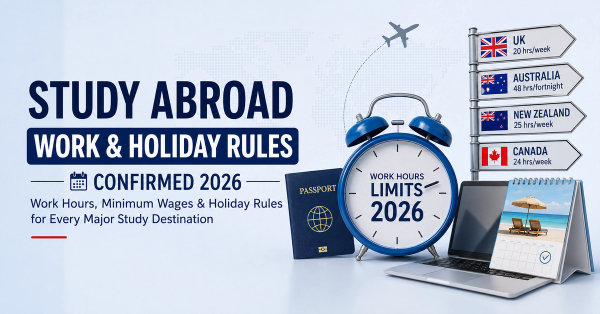
Students who choose universities in cities such as Sheffield, Manchester, Leeds, Edinburgh, or Birmingham can often reduce their living costs by 20–30% compared to London. UK Student Visa holders can work up to 20 hours per week during term time, contributing GBP 5,000–8,000 per year toward living expenses.
Scholarships Available for Nepali Students Studying in the UK
UK Student Visa for Nepali Students: Everything You Need to Know
To study in the UK, Nepali students must apply for a UK Student Visa — formally known as the Student Route visa. The most important thing to understand is that you can only apply for this visa after receiving a Confirmation of Acceptance for Studies (CAS) from a Home Office-licensed UK university.
Documents Required for UK Student Visa
- CAS Number — Confirmation of Acceptance for Studies issued by your UK university
- Valid Passport — must be valid for the duration of your course plus additional time
- IELTS / TOEFL Score — meeting the minimum requirement of your university
- Proof of Funds — bank statements showing you can cover tuition + GBP 1,334/month for living (London) or GBP 1,023/month (outside London)
- Academic Transcripts — +2 mark sheets, certificates, and any prior qualifications
- Tuberculosis (TB) Test — mandatory for Nepali students applying for UK student visa
- IHS Payment Receipt — Immigration Health Surcharge of GBP 776 per year paid online
- Biometric Information — collected at a Visa Application Centre in Kathmandu
The UK Student Visa application fee is currently GBP 490 (applied from outside the UK). You should apply no earlier than six months before your course starts, and at least three months in advance to allow sufficient processing time. Most applications are processed within three weeks.
Step-by-Step: How to Apply to UK Universities from Nepal
The UK university application process follows a structured timeline. Starting early is absolutely essential — ideally 12 to 18 months before your intended start date.
Most Popular Courses for Nepali Students in the UK
While Nepali students pursue a wide range of subjects in the UK, certain fields are particularly popular. Business and Management remains the most commonly chosen field, with programs available at virtually every UK university and strong links to London's financial services industry. Computer Science and IT are increasingly popular given the UK's growing tech sector and the global demand for software engineering skills.
Healthcare and Nursing programs have seen a significant increase in Nepali student applications, particularly following the UK's active international nurse recruitment drive. Similarly, Engineering programs — especially civil, mechanical, and electrical engineering — are in high demand due to the UK's world-class research facilities. Additionally, subjects like Architecture, Hospitality and Tourism Management, and Media and Communication consistently attract Nepali students looking for creative, globally applicable qualifications.
What Happens After You Graduate in the UK?
After completing any undergraduate or master's degree from a licensed UK university, you are eligible to apply for the Graduate Route visa, which allows you to stay and work in the UK for two years without needing a job offer or employer sponsorship. PhD graduates receive three years under this route.
During this period, you can work in any job at any level — giving you the flexibility to build UK work experience, explore different industries, or transition to a skilled worker visa if you secure a sponsored position. Moreover, many Nepali graduates who return home find that their UK qualification significantly enhances their career prospects, salary expectations, and entrepreneurial opportunities in Nepal's growing economy.
Common Questions from Nepali Students About Studying in the UK
Your UK Education Journey Starts with the Right First Step
To summarize, studying in the UK after +2 from Nepal is absolutely achievable — but it demands early planning, strong academic preparation, and careful financial management. The rewards, however, are significant: a globally respected degree, real post-study work rights, and a career trajectory that can take you anywhere in the world.
At Admizz Education, we have helped hundreds of Nepali students successfully navigate the UK application process — from identifying the right universities to completing visa documentation and preparing for departure. Our guidance is free, personalised, and built around your specific goals.